So, I’m thinking of putting Cytek’s on my horse.

Now what happens?

The purpose of this article is to give prospective cytek users a bit of a walkthrough on what to expect.

Firstly, expect criticism.

If its not that longtime friend of yours who thinks they know everything about horses telling you that Cytek’s are bad, it will probably be your barn owner, agistment manager, property owner, and lets not forget, your rimshoe farrier.

All of the above are going to go out of their way to plant the seeds of doubt in your mind. But if you are at the stage where you are deciding to put the shoes on, you are probably in a better frame of mind to “take it on the chin” or politely let them know that this is something that you have to discover for yourself.

Next, expect to be shocked!

The reactions that I see on the faces of people who are having their horses cytek’ed for the first time, is in a word, priceless. Because no-one thinks a horses feet can go that short. We are a society of conditioned responses. I witnessed on facebook the other day a woman being criticized because her horse was “underweight”. It wasn’t underweight, it had a high muscle content, and was lean – It was not underweight. We are a society that is conditioned to see “big” as “not so big” Our shire horses, and our Clyde’s carry far to much weight, because the breed specific says that they should be well rounded. Well rounded does not mean morbidly obese. But I digress.. I believe this flaw transfers to the feet. We are so conditioned to seeing long toes, that short toes look alien, and wrong, and unacceptable.

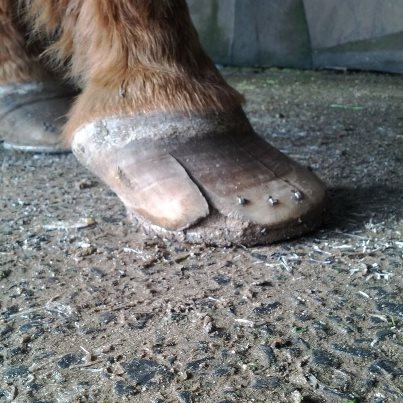
Be prepared to stand there in absolute shock. Depending on the current state of your horses feet, and the associated illnesses of the foot, there could be a substantial amount of length to come off. This will come as a shock. But please be assured, the excessive toe length is what is causing your horses problems. He doesn’t need it.

Does this mean your horse is going to be cut so short he’s bleeding? God no! But he will probably be a hell of a lot shorter in his first trim than you would expect.

How will my horse react the first time? 

It depends on his current foot problems.

I’ve watched a horse with chronic long toes, who tripped constantly in a walk, and threw a shoe every week – trot off in his cyteks, immediately complete a three hour trail ride without so much as a stumble.

I’ve watched a horse limp in so lame that I myself felt pain just watching the horse struggle to move, only to move off so fast that the owner couldn’t get a photograph of her happy horse.

Personally, my thoroughbreds movement became much smoother instantly. I went out on our first trail ride and was able to achieve an extended trot, and slow canter – things my horse had never previously been able to do.

My mare, who had spent her entire life barefoot required cyteks to assist in the healing of her foot following a persistant abscess after months of wet weather. Her reaction was one of pure relief. Months of guarding against the pain in her foot disolved immediately when she realized she had the sole support she needed. When she put that particular foot down, her eyes rolled back in her head, she yawned, snorted, licked and chewed constantly until finally her eyes closed and she drifted off before the farrier had even finished putting the shoes on.

One thing is for sure. Your horse will benefit from having these shoes on

Don’t be surprised if your horse is a little tender over the next few days.

Don’t worry if you visit your horse the day after his first cytek shoeing, or maybe even the first few days – only to find him a little tender. This is normal. The pain isn’t foot pain – its muscle pain. In my first post I used a flipper analogy.  If you think of that now, he’s had his flippers removed after years of wearing them. The way he moves has changed, the muscles he now uses are different, he’s standing straighter. His tendons and muscles need to adjust to this new stance, he may well be tender, its nothing to be alarmed about.

I remember years ago working with a young girl who wore stilleto’s to work. Due to the nature of the industry I worked in at the time, our boss encouraged my colleague to wear flat shoes with a closed in toe. The day she wore flat shoes into work, she spent half the day walking around on her tip toes, as it was to quote her ” A habit of a lifetime”. She had trouble adjusting to the flat shoe.

This is what your horse will go through, he will need time to let his muscles and tendons adjust. It will pass, some horses quicker than others – just know that it will probably happen, and don’t be surprised when it does.

Don’t be surprised if he blows an abcess, or two.

It depends on the current pathologies in the horses foot. Does he have seedy toe? Laminitis? is he prone to abcesses anyway? Does he have serious toe cracks?

Then don’t be surprised if he abscesses in the first week to two weeks. Its normal. Ridding the foot of the extra length, and supporting the foot, gets the horse moving, and get the blood pumping through the foot – This may cause an abscess in the beginning.

Will my horse really sleep better? Are you kidding? 

Not kidding! Your horse will definitely sleep better! Think about it this way – you’ve taken away his chronic foot pain. The short toes enables him to sleep more comfortablly, he will be a happier horse!

What else will I notice?

Benefits of cytek shoeing include:

  • Smoother gaits
  • Smoother transitions
  • Increase in muscle tone and topline
  • Reduction in sweating
  • Calmer horse out on the trails / in the arena
  • Increase in energy
  • Quicker recovery time after work

Think about it this way – with the shorter toes, your horse doesn’t need to work anywhere near as much as he did previously. He is not using anywhere near as much energy to do whatever it is you ask him to – this is going to manifest in a reduction in sweating, quicker recovery time, and and increase in energy.

His muscle tone and topline are going to increase because he’s no longer bracing against the pain in his feet, He is fluidly using his entire body to move in accordance with whatever instruction it is you are giving him, there is no longer any pain or tenderness holding him back, don’t be surprised if you have to get your saddle repacked!

Be prepared to dedicate a set amount of time to these shoes.

If you are going to put Cytek’s on your horse, you need to give them the time it takes to heal the foot.

There is no point putting the shoes on, only to rip them off a few weeks later stating that “the foot looked worse” or “he didn’t move differently” or other reasons..

Make the decision to put the shoes on, if the original shoeing doesn’t convince you – devote 3-6 months minimum to these shoes before deciding to move on. In 99.9% of cases the changes in the horse will be instant. In a very small percentage of horses (who’s feet are typically on deaths door) the changes will NOT be instant, and you need allow a few shoeings –

For example: When i put Cytek’s on my thoroughbred, his wall cracks didn’t grow out instantly. I was devestated. But, the cracks COULDNT’ grow out, as there was still way to much flare on the foot. Yes, the walls had been considerably unloaded, but the foot was still long, the first few trims served to balance the foot, and this caused the cracks to move from slightly off center, to actually taking a 90 degree turn, travelling horizontally for 1cm and then continuing back up the hoof. It was MONTHS before the cracks started growing out. And even then, lousy weather, and an insistant seedy toe infection constantly “rained on our parade”.

What I am trying to get across here is, you need to understand that it takes 6-9 months to regrow a hoof wall (depending on what part of the world you are from), and in seriously sick feet, it can take 12-18 months for a foot to be “normal”.

You need to devote enough time to let these shoes work. Its hard! People will be telling you “they don’t look any better” “told you they wouldn’t work” “I think his feet look worse”, you just have to rise above it and keep your eye on the bigger picture. If I can say one thing:

Let your horse be the judge.

Block everyone else out. What is your horse telling you? My thoroughbred has been cytek shod and lame free for two years.

Let your horse be the judge. You will see it in his personality. He will be happier, more relaxed, he will feel better to ride, he will be more willing to move, he will gain muscle tone and topline. He WILL tell you, that this is right.

Research your farrier!!

I cannot stress this enough! The cytek shoe is only going to be as good as the person applying it. Please, please make sure you ask around, ask for references from the farrier, contact the cytek website, if at all possible talk to other people who have their horses cyteked by the same farrier. The vast majority of these guys and girls are going to do a stellar job on your horse, but you need to make sure you are getting a certified cytek farrier.

Does my horse have to have bad feet to benefit from Cytek Shoes? 

Absolutely not. Isn’t prevention better than cure? The sad truth remains, that generally, people only hear about cytek shoes when their horse is an abscess away from being euthanised. ANY horse, with feet in ANY condition would benefit from Cytek shoes. Prevention is always better than cure!
Cytek vs Rimshoe, its all about support!

Today, i want to look at the fundamental differences between a Cytek shoe, versus a rim shoe.

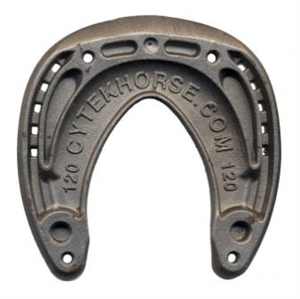
A Cytek Sole support Shoe

A Standard rim shoe

Take a few minutes to look at both images. Have a look at the width of the shoe, take notice of the amount of metal used in each shoe.

At a glance – which shoe do you think gives more support? The Cytek, or the rim shoe?

The first introduction I ever had to cytek shoes was when my soon to be farrier threw one on the ground infront of me, along with a rim shoe, and directed me to put my left foot on one, and right foot on the other.

Wow.

Have you ever done that? If so – we probably have the same farrier 🙂 But seriously, I thoroughly recommend this for ANYONE who gets the opportunity to do it. put one foot on a cytek, and the other on a rim shoe. Feel what your horses feel.

Your foot will fall through the bottom of the rim shoe, whereas your foot will feel more stable in a cytek shoe. Its something that you won’t get until you experience it.

What has a Cytek shoe got, that a rim shoe doesn’t? 

Put simply?

Sole support.

The Cytek shoe takes a foot with a balanced trim and short toe, and gives it support. There is nothing magical about these shoes. They are not therapudic, they are not remedial, they are not corrective (don’t get me started on corrective shoeing), they are common sense shoeing, the way it used to be done. Get the toe back, support the foot. Its that simple.

What is the major difference between a Cytek shoe and a rim shoe? 

The distribution of load.

The Cytek shoe (owing to its width and placement on the foot) takes the reactive load of a horse in movement, and distributes it evenly over the foot, and subsequently through the skeletal system of the horse.

A Rim shoe, (owing to its lack of width and placement on the foot), takes the reactive load of a horse in movement and channels it all on the wall of the horse. Go back and have a look at the two images. Can you see it now? A rim shoe works on the fallacy that the wall was designed to take the full load of the horse. As discussed in my earlier post, this is not true. There is nothing on the bottom of a horses foot that wasn’t designed to take load. Once you can get your head around that concept – seeing the fundamental differences in the loading principles of each shoe is pretty obvious, don’t you think?

The rim shoe loads the wall.

The Cytek shoe, loads the foot.

Why is the placement of the shoe so important? 

The Rim shoe, is designed to fit to the wall of the horses foot, because of the design of the shoe, the constraints on where it is attached, a great deal of wall length is required in order for the shoe to be fitted correctly. As we now know – length creates leverage. The more length, the more leverage!

The Cytek shoe is designed to locate under the pedal bone (sole support), as such it sits back further on the foot, breakover is bought back, making the horses gaits smoother, and more efficient, the pedal bone is supported – taking away any pain caused by previous lack of support.

But, don’t they both nail through the wall? 

Yes, both shoes do. However, its the size / design of the shoe that denotes distribution of load, not where the shoe is nailed. The bigger the surface area of the shoe, the bigger the distribution of load.

How long have Cytek’s / Rim shoes been around? 

Now, this will shock you. Most people regard Cytek shoes as “new” technology. But its not. Rim shoes are the new technology.

A simple google search of “horse shoes” leads us here:

http://en.wikisource.org/wiki/Horse_shoes_and_horse_shoeing:_their_origin,_history,_uses,_and_abuses/Chapter_IV

You don’t have to read the article if you don’t want to – just look at the pictures! Have a look at the size of those shoes! Look familiar?? Cytek’s are so old, they’re new again. Cytek’s, in one form or another, have been around since the earliest records of horse shoeing. Rim shoes exist as a cost cutting exercise – It cost far less both in man power and monetary terms to churn out rim shoes, than the comparative cytek’s. Take a look at the first two images on this post. Which do you think is harder to produce? Which has the more metal?  How many horses shod in the days of the above article experienced laminitis? Navicular, ringbone? This very concept is a separate blogpost all of its own!

For now – if you know someone who would benefit from this article – send it on

Interesting reading wouldn’t you agree?

Don’t you agree – Length Creates Leverage?

Toe length…

Thoroughbred with long toes. There is no doubt this horse would have some degree of lameness, probably forges. Note the crack in the hoof, caused by long toes.

Probably the singularly most overlooked cause of hoof problems in the equine world. And ironically, the absolute most important factor. If horses had correct toe length, there is no doubt in my mind that 95% the lameness issues the average horse owner dealt with – wouldn’t exist.

Lets have a look:

  • Toe Cracks
  • Wall Cracks
  • Forging
  • Stumbling
  • Chronic Lameness

And these are just the manifestations of long toes in the FOOT! You then have to deal with the manifestations within the body / mind

  • No topline
  • Grumpy / Aggressive horse
  • Constant back soreness or “saddlefit issues”
  • Horse that rushes on trails

So lets talk about these issues, how and why they are cause & effect of long toes:

Toe Cracks

You’ve probably been told that toe cracks are due to the fact that your horse has “bad feet” or “bad breeding”, some farriers might have even told you its because of your horses breed: “Its a thoroughbred, not much you can do really”.

But that’s not really true. Toe Cracks are the consequence of incorrect shoeing / trimming. Try this experiment: Using the longest fingernail you have, flick it repeatedly over the edge of a benchtop or similar flat object with a sharp edge. Do this for 30 seconds. How long do you think it will take before you fingernail starts to tear, chip and bleed.

What you are experiencing is a “lever moment” (as the engineers among us would say), Where the effect at the attachment point is magnified incredibly, due to the distance from attachment point to the application of the force.

In English, this means, the longer the toe, the worse the “reaction” at the attachment point.. the attachment point being – the hoof wall. The hoof wall, is the weakest attatchement point, and WILL CRACK because of the leverage caused by long toes.

Forging

Or the action of the horses back foot interfering with the front – usually meaning the horse clips the heels of his front feet, with his back feet – again – due to the fact that the horses feet are too long. Do you remember when you were young, at the beach, or the pool, running in flippers? Or, trying to run in flippers. Never a very successful exercise was it..

Forging is no different – the horses natural action is being interfered with by its long toes. These horses are labelled lazy, or clumsy – but they aren’t – they are trying to walk with toes that interfere with their natural movement, this of course, leads us to..

Stumbling:

A horse who forges, or stumbles in a walk / trot etc, is often accused of being lazy or clumsy. Again, this is usually not the horses fault. Using the flipper analogy again, do you remember how hard it was to run in flippers? Why should it be any easier for your horse? Horses with long toes, run in flippers every day! This of course leads us to..

Chronic Lameness

And can you blame the horse? A horse with long toes is probably using muscles he never even knew existed, in order to “get over” his long toes. Horses that chonically pull up sore after a ride are not athleticising correctly, and the issue more often than not, starts in the foot, His natural action is exaggerated to compensate for the toes, he’s using way to many muscles to do the simplest of gaits, and expending way to much energy, of course he is going to be sore.

So, then, lets take a look at the associated issues of excessive toe length in a horse: No topline, grumpy / aggressive horse / backsoreness / horse that rushes.

These can all be attributed to consequences of foot pain.

The horse that “braces” in order to cope with pain in his feet, will have back pain which most people mistake for saddlesoreness. Its usually due to the feet. A horse who braces against pain cannot develop topline, because he isn’t using his topline muscles! This creates a sore horse, who isn’t resting well of a night because he can’t achieve an optimum resting stance due to his long toes. The horse is now not sleeping well, and is beginning to associate riding or groundwork with pain in his feet – Of course he is going to be grumpy or saddle aggressive. Finally, you might even find your horse rushes out on the trails. Why? Because he’s not stupid. Firstly, the quicker he moves, the quicker he gets home and the pain stops. And secondly, the quicker he moves, the quicker the pain caused by excess leverage  acting at the hoof wall – is transferred from one foot to the other.

There is nothing on the bottom of a horses foot that wasn’t designed to bare weight

I’ll say it again.

There is nothing on the bottom of a horses foot, that isn’t designed to bare weight.

Was the hoof wall ever meant to take the full load of a 500kg horse at full speed? No.
Was the frog ever meant to take the full load of a 500kg horse at full speed? No.
What about the sole? No!

But were these three separate elements designed to  take the SHARED load of a 500kg horse at full speed? Absolutely!

The hoof “UNIT”, takes the reactive force of a horse moving at speed over ground, and shares it over the entire hoof mechanism. Read again “mechanism”. Each individual element acts together in order to disperse that massive load, evenly over the entire foot and up the leg, into the larger musculoskeletal system.

And what do we do?

We load the peripheral edge of the wall…. keep the toes long to tack a rim shoe on, which serves NO purpose but to weaken the integrity of the toe to laminae attachment, by forcing the full load a horse in movement, to be absorbed purely by the long toes!

If you take nothing else away from this blogpost, remember this one thing: Length creates leverage. This is a simply rule of statics / physics, which doesn’t change just because it involves horses.

Length creates leverage. The longer the toes, the more leverage.

Its as simple as that.

Welcome to Cytek Revolution

Hi all,

This blog is the result of an idea I had the other night – After referring a few friends to Cytek shoes, and telling them to research them, I received comments stating that they actually couldn’t find anything positive on the internet about Cytek Shoes. Unless you went to the Cytek website, there was very very little positive media on Cytek (unless you knew where to look).

Quite frankly this annoys me, because it appears that people who only know half truths about the shoe, or have heard from someone, who heard from someone else, who knew of someone who once used the shoe, that they were evil, and completely unworkable – then get on the internet and factually inform others that the shoe is no good, going as far as to criticize and insult those of us who have actually gone out and given them a go. I hate that people who are trying to research the shoe, get turned off them, simply because the forums are filled with complete fiction.

The fact of the matter is – the Cytek shoeing system causes every farrier, every trimmer, every person who has ever confessed to being a professional hoof care provider, to question just what the hell it is they have been doing to horses feet for the last God knows how many years.

Not many people are prepared to sit there and admit “Gee, we could have been going about this the wrong way!”

How many horses suffering from Navicular, Ringbone, Laminitis, Wall cracks and Pedal bone rotations have you seen with heart bar shoes, and elaborate braces and putty or filler designed to pull the foot together? How many horses have you heard that have actually lost their lives because the owner has been told “there is nothing more you can do for this horse?”

The simple answer is – 99% of these horses died unnecessarily. There is a 100% garuanteed cure for every single one of the afflictions listed above.

And its this: Short toes and sole support. Get the toe off, support the foot, It doesn’t get easier than that. I will put money on the fact that most of a horses foot problems are due to long toes and an unbalanced trim.

My intention with this blog is to post success stories that I receive, with photos and in depth information – a positive and honest reflection of the Cytek Shoe and everything it has to offer.

If you are using the shoe, please send me your story. If you are considering using the shoe, then please stick around.